Emergency tree pruning gardeners same day Highgate N6
When a branch is hanging low over a path, a split limb is scraping a roof, or a tree suddenly looks unsafe after wind and rain, you do not want to wait around. You want practical help, quickly. That is where Emergency tree pruning gardeners same day Highgate N6 becomes more than a search term - it is the difference between a manageable problem and a costly mess. In Highgate and the wider N6 area, fast action matters because gardens are often close together, access can be tight, and even a small failure in a tree can affect fences, sheds, vehicles, or neighbours. This guide explains what same-day emergency pruning actually involves, how it works, who needs it, and how to judge whether a situation is urgent or can be scheduled more calmly.
To be fair, not every branch needs panic. But some do. And knowing the difference is half the battle.
If you want a broader look at available work beyond urgent call-outs, the services overview and tree lopping and removal service are useful starting points for understanding how tree care is handled alongside other garden work.
Table of Contents
- Why emergency tree pruning matters
- How same-day emergency pruning works
- Key benefits and practical advantages
- Who needs this service and when it makes sense
- Step-by-step guidance
- Expert tips for better results
- Common mistakes to avoid
- Tools, resources and recommendations
- Law, compliance, standards and best practice
- Options, methods and comparison
- Case study or real-world example
- Practical checklist
- Conclusion
- Frequently asked questions
Why Emergency tree pruning gardeners same day Highgate N6 Matters
Emergency tree pruning is about reducing immediate risk. That may mean removing a broken limb, shortening a heavy branch that has shifted dangerously, or tidying up storm damage so the tree is stable enough for follow-up work later. In many cases, the goal is not a perfect finish on the day. The goal is safety, access, and preventing the problem from getting worse.
Highgate N6 has its own practical quirks. Mature trees, narrow front gardens, shared boundaries, parked cars, and foot traffic all change the job. A branch that could wait a week in a large rural garden may need action the same day in a London residential street. If a limb is rubbing against a window, overhanging a neighbour's greenhouse, or threatening to fall onto a public pavement, delay can be the expensive choice.
There is also the weather factor. A bright morning can turn windy by lunchtime. After a storm, trees often reveal hidden cracks, lifted roots, or split unions that were not obvious the night before. You might hear creaking, see a branch sagging oddly, or notice fresh sawdust where a break has started. Those are warning signs, not decoration.
Emergency pruning matters because it buys time. It reduces immediate danger while preserving as much of the tree as possible. That balanced approach is usually better than rushing into heavy removal. Truth be told, a lot of tree problems are made worse by people cutting too much, too quickly, without a plan.
Expert summary: same-day emergency pruning is usually about safety first, controlled reduction second, and full restoration later if needed. The best result is often the calmest one.
How Emergency tree pruning gardeners same day Highgate N6 Works
A proper same-day emergency response is usually straightforward, but it should still feel organised. Good gardeners or tree workers do not just turn up and start hacking away. They assess the risk, decide what needs to be made safe immediately, and then work in a way that avoids creating a second problem.
The process often looks something like this:
- Initial call or enquiry. You explain what has happened, where the tree is, and whether there is any immediate danger to people, property, or access routes.
- Rapid triage. The responder decides if the job is truly urgent, whether it can be made safe same day, and whether specialist tree work is needed.
- Arrival and inspection. On site, the team looks for split limbs, hanging branches, decay, movement at the base, or other signs of instability.
- Safety setup. Area control matters. They may cordon off access, move light items, and make sure nobody stands under the tree. Simple, but essential.
- Emergency pruning or reduction. Unstable sections are carefully removed or shortened to lower risk.
- Clear-up and advice. The site is tidied, arisings are managed, and you are told whether follow-up pruning, inspection, or removal is advisable.
In practice, same-day work may be limited by weather, access, height, and the condition of the tree. If the problem is high in the canopy, close to cables, or clearly beyond basic pruning, a gardener may advise a more specialised tree service. That is not a brush-off; it is sensible judgement.
If the immediate issue is part of a larger garden reset after a storm, it can also make sense to combine the urgent job with broader clearance. In that case, garden clearance support can help remove broken material, debris, and branches once the dangerous parts have been dealt with.
Key Benefits and Practical Advantages
The obvious benefit is speed. But speed alone is not the whole story. Same-day emergency pruning has several practical advantages that people often only appreciate after the stress has passed.
- Reduced immediate risk. The main purpose is to protect people, structures, vehicles, and walkways.
- Damage limitation. Cutting a failing limb before it snaps fully can prevent a much worse fall.
- Better decision-making. A quick on-site assessment helps separate genuine danger from a tree that merely looks messy.
- Less stress. It is surprisingly reassuring to know someone competent has looked at the problem.
- Protection of the tree. Careful emergency pruning can avoid unnecessary removal.
- Cleaner follow-up work. Once the immediate issue is handled, longer-term maintenance becomes simpler.
There is a quieter benefit too: you keep control. When a tree is half-down after wind, everything feels urgent and a bit chaotic. A prompt response creates a plan. Even if the final answer is "we need to return for a second visit," that is still progress. And usually a relief.
For ongoing prevention, regular garden care helps. Services such as garden maintenance and hedge trimming can reduce the chance of overgrown growth becoming a surprise hazard later on.
Who This Is For and When It Makes Sense
This service is for anyone facing an urgent tree issue that cannot safely wait. That might be a homeowner, landlord, tenant, property manager, letting agent, or someone responsible for a communal garden. In Highgate, it is especially relevant where mature trees sit close to houses, boundary lines, or footpaths.
Typical situations include:
- a branch has split but remains partly attached
- wind has caused a heavy limb to sag over a driveway
- fallen debris is blocking access
- a tree is rubbing against a building or window frame
- broken branches are still lodged in the canopy
- there is visible movement after a storm
- you need a same-day safety reduction before visitors arrive
When does it make sense to act immediately? If there is a credible risk of injury or property damage, do not wait for the weekend. If you can keep people away and the tree is stable, you may be able to schedule the job more calmly. A good rule of thumb: if you are asking yourself, "should this be in front of the house right now?" it probably deserves a prompt assessment.
Not every issue is a pruning issue either. Sometimes the safer answer is tree lopping, sometimes removal, and sometimes simply cutting back a few problematic limbs. That judgement call is where experience matters, and why a proper tree lopping and removal service can be worth having in the background even if pruning is the immediate request.
Step-by-Step Guidance
If you are arranging urgent help, a structured approach saves time and reduces confusion. Here is the practical version.
- Make the area safe. Keep people, pets, and vehicles away from the danger zone. Do not stand under hanging branches. Sounds obvious, but in the moment people often drift closer for a look.
- Take a few photos. If safe to do so, take clear images from a distance. They help explain the issue before anyone arrives.
- Check access. Make sure gates, side passages, and front entrances are usable. If access is awkward, say so early.
- Describe the problem plainly. Mention whether the tree is leaning, cracked, split, rubbing, or partly fallen. Plain language is fine.
- Ask what can be done same day. Emergency work may mean temporary stabilisation, selective pruning, or full removal of the hazard section.
- Confirm the expected outcome. You want to know whether the aim is immediate safety only or a more complete tidy-up too.
- Review the advice after the work. If follow-up pruning or monitoring is recommended, note it down. Tree problems rarely disappear because we wish them away.
Here is the useful bit: a fast response should still include a proper explanation. If someone says, "we'll just take the dangerous part off for now," that can be the right answer. It is often better than a rushed, overcut tree that becomes weak in the wrong places.
And yes, sometimes the tree looks fine from the road but reveals a very different story once you stand beneath it. Happens all the time.
Expert Tips for Better Results
A few small choices can make a big difference to the outcome. These are the details that separate a neat emergency job from one that creates more work later.
- Prioritise the failure point. The branch with the crack or split is usually the first focus, not the whole tree.
- Avoid "just taking a lot off." Heavy, uneven cuts can unbalance a tree or make future growth awkward.
- Use selective reduction where possible. Smart pruning often preserves shape and reduces stress better than blunt cutting.
- Leave room for a proper follow-up visit. Emergency work may be the first stage, not the final one.
- Watch for hidden damage. Bark splits, torn fibres, and uplift at the base can signal deeper issues.
- Think about the future shape. Even in an emergency, the best cut is usually the one that still makes sense next season.
Another tip: if your tree is near structures, ask for a calm explanation of what was cut and why. A short walk-around afterwards is ideal. Five minutes there can save five headaches later.
For properties where the garden layout is part of the problem, a broader look at landscaping or landscape gardening may help reduce recurring access or overgrowth issues. Not always, but often enough to be worth considering.
Common Mistakes to Avoid
Emergency tree work is one of those jobs where a few mistakes can snowball quickly. Here are the ones worth avoiding.
- Waiting too long. If a branch is already partially failed, delay can turn a manageable cut into a full collapse.
- Trying to DIY a high or unstable branch. A ladder, a saw, and a false sense of confidence is a bad combination. Honestly, it is the sort of thing that looks brave for about two seconds.
- Ignoring the base of the tree. If the root plate is lifting or the trunk is moving, pruning alone may not be enough.
- Cutting without a plan. Random trimming can make the tree look smaller but not safer.
- Assuming all "green" trees are healthy. A tree can still fail even if the leaves look normal.
- Forgetting about the cleanup. Branches, sap, and debris can be part of the hazard too, especially on paths and drives.
One subtle mistake is under-communicating. If the tree is near a neighbour's boundary, parked vehicles, or a shared access path, mention that at the start. It saves awkwardness later. And a bit less awkwardness is always nice.
Tools, Resources and Recommendations
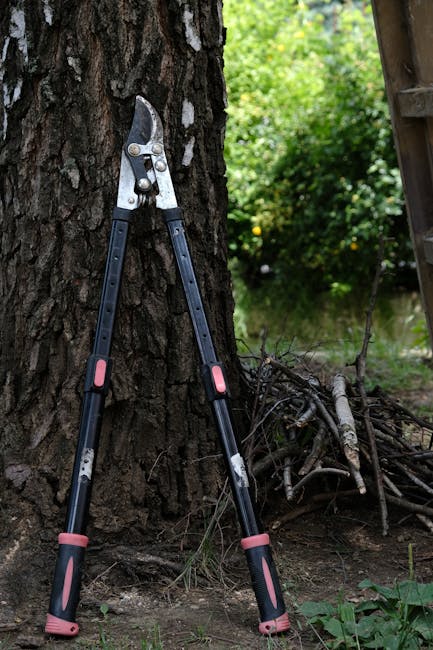
For emergency pruning, the right tools depend on the job, but the basic kit usually includes hand saws, secateurs, loppers, pole tools, ropes, lowering equipment, and protective gear. On more complex jobs, proper access equipment and controlled cutting methods matter a great deal. The point is not to show off. The point is to make the cut safely and with restraint.
From a homeowner's point of view, the most useful "resource" is often simply a clear understanding of the issue. A few photos, a quick note about what happened, and an honest description of the risk are enough to get the right help moving quickly.
If the problem is part of a wider seasonal tidy-up, it can be efficient to combine it with other tasks. After the emergency is contained, a visit for lawn mowing or broader garden maintenance can restore the garden's appearance so the whole space does not feel half-finished.
Recommended mindset: ask what is being done today, what remains for later, and whether the tree will need monitoring. Clear answers are worth more than a long list of vague promises.
Law, Compliance, Standards, or Best Practice
Emergency tree pruning is not just a matter of cutting back branches and hoping for the best. In the UK, tree work should be carried out with attention to safety, property boundaries, access, and any applicable local protections. That does not mean every job is complicated, but it does mean sensible checks are part of the process.
Good practice usually includes:
- working safely around people, buildings, and vehicles
- using appropriate protective equipment
- avoiding unnecessary damage to the tree
- respecting neighbouring property and access routes
- checking whether additional permissions or restrictions might apply before non-urgent work
- making sure waste is handled responsibly
If a tree seems to be protected, or if there is any doubt about who owns it or what can be done, it is better to pause and confirm the situation rather than assume. Emergency pruning can still be carried out where there is immediate danger, but it should be approached carefully and with proper judgement. That is the sensible norm, not the exception.
It is also worth asking about insurance and safety arrangements before work begins. A reputable provider should be able to explain how they manage risk and why. For a closer look at that side of the service, see the site's insurance and safety information and health and safety policy. If waste handling or green material disposal is relevant, the recycling and sustainability approach is also worth understanding.
Best practice in this sort of work is not glamorous. It is careful, measured, and a bit unhurried even when the request is urgent. That is exactly what you want.
Options, Methods, or Comparison Table
Depending on the situation, there are a few different ways an emergency tree issue may be handled. The right choice depends on safety, tree health, and access.
| Approach | Best for | What it achieves | Limitations |
|---|---|---|---|
| Selective emergency pruning | Partly split limbs, light storm damage, rubbing branches | Reduces immediate risk while keeping most of the tree | May not solve deeper structural issues |
| Reduction pruning | Heavy overextended growth or branches too close to property | Low-risk shape adjustment and better balance | Should be done carefully to avoid overcutting |
| Temporary make-safe work | Highly unstable situations needing urgent control | Creates short-term safety until fuller work can happen | Not a final solution |
| Tree lopping or removal | Severe damage, major decay, or ongoing risk | Removes the source of danger where pruning is not enough | More disruptive, often a bigger decision |
Which option is best? The honest answer is the one that solves the safety problem without making the tree or the garden worse. Sometimes that is a light cut. Sometimes it is more involved. And sometimes the best call is to step back and say, "this needs a tree specialist, not a quick tidy."
If you are comparing service types for a broader project, the services overview gives a helpful sense of how emergency pruning sits alongside other outdoor work.
Case Study or Real-World Example
A typical Highgate scenario goes like this. After a windy night, a homeowner notices that one large limb is hanging low over the front path. The branch is not fully broken, but it has clearly shifted. Leaves are still attached, which can make the problem look less dramatic than it is. By morning, the path is effectively unusable. A child's scooter is parked nearby, a neighbour needs access, and the branch is creaking in the breeze.
In a case like that, same-day emergency pruning usually focuses on making the area safe first. The unstable limb may be shortened or removed in sections, with the surrounding area kept clear while the work is done. Any debris is cleared. The homeowner is then told whether the tree needs further inspection or more selective pruning later in the season.
The useful lesson is simple: the best emergency response does not try to do everything at once. It sorts the immediate risk, tidies the site, and leaves room for proper follow-up. That calm, methodical approach is often what people remember afterwards. Not the drama. The relief.
Sometimes, once the branch is down, it becomes obvious that the issue was part of a wider garden maintenance problem - overgrown crowns, lack of clearance, or neglected boundaries. In those cases, arranging future hedge trimming or broader garden care can help stop the same headache returning after the next storm.
Practical Checklist
Before or during an emergency pruning visit, this checklist helps keep things organised.
- Move people, pets, and cars away from the danger area
- Take clear photos from a safe distance
- Note whether the tree is leaning, split, or touching a building
- Check if access to the garden or driveway is possible
- Tell the gardener if the issue started after wind, rain, or a sudden crack
- Ask whether the work is make-safe only or a fuller pruning job
- Confirm whether any follow-up visit is recommended
- Ask how the branches and waste will be handled
- Keep the area clear until the work is complete
- Request straightforward advice about future monitoring
If you tick most of those boxes, the appointment is likely to go smoothly. Not perfectly - no real-world job ever does - but smoothly enough that the stress drops fast.
For help arranging the next step, you can review the company details on the about us page, then use the contact page to discuss the urgent issue and availability. If you are comparing options or planning ahead, the pricing and quotes information may also be useful.
Get a free quote today and see how much you can save.
Conclusion
Emergency tree pruning is one of those services you hope you never need, until the day you really do. In Highgate N6, where mature trees and close-built homes often sit side by side, a fast and sensible response can prevent much bigger problems. The key is not just getting someone out quickly, but getting someone who can judge the situation properly, prune with care, and leave you with a safer garden and a clearer head.
Whether the problem is a split branch, storm damage, or a tree that suddenly looks too close for comfort, same-day help is about restoring control. And that matters more than people sometimes realise. A quiet garden after a stressful morning feels different. Safer. Lighter, somehow.
If you need a practical next step, start with a clear explanation of the issue and a prompt enquiry. The sooner the hazard is assessed, the sooner the rest of your day can get back to normal.
Frequently Asked Questions
What counts as an emergency tree pruning job?
An emergency job usually involves an immediate safety concern, such as a split branch, dangerous overhang, storm damage, or a tree affecting access. If there is a real risk of injury or property damage, it is normally treated as urgent.
Can emergency pruning be done the same day in Highgate N6?
Often, yes, if the situation is safe to attend and the access is workable. Same-day response depends on workload, weather, time of call, and how complex the tree is. Some jobs can be made safe quickly; others need a staged approach.
Is emergency pruning the same as tree removal?
No. Emergency pruning aims to reduce immediate danger while keeping the tree standing where possible. Tree removal is usually reserved for cases where pruning cannot make the tree safe enough.
How do I know if a branch is actually dangerous?
Look for splitting, hanging movement, cracking sounds, visible tearing, or sagging that has appeared suddenly. If in doubt, keep clear and get it assessed. A branch can look stable and still fail, which is the annoying bit.
Should I prune a storm-damaged tree myself?
Only very small, low-risk pruning should ever be attempted by a homeowner. Anything high, unstable, or near structures is best left to a trained gardener or tree professional. Ladders and chainsaws do not make a good team with panic.
What happens if the tree is near a boundary or neighbour's garden?
The work still needs to be handled carefully and respectfully. Clear communication is important, especially where access, overhang, or debris could affect neighbouring property. A proper assessment helps avoid disputes and accidental damage.
Will emergency pruning damage the tree?
Any cut affects a tree to some degree, but careful pruning aims to minimise stress and preserve structure. The bigger risk is often leaving a broken limb in place or cutting too much without a plan.
What should I do before the gardener arrives?
Keep everyone away from the area, move vehicles if it is safe, and take a few photos from a distance. Give clear details about what happened, when it happened, and whether the tree is touching anything. That makes the visit more efficient.
Do emergency pruning jobs include cleanup?
They usually should, at least for the cut material and obvious debris created during the visit. If there is a large amount of waste or wider garden debris, additional clearance may be needed as a separate step.
How much does same-day emergency pruning cost?
Pricing varies depending on urgency, access, height, the amount of work required, and whether specialist equipment is needed. A brief assessment or quote request is the best way to get an accurate figure rather than guessing from a distance.
What if the tree is protected or I'm not sure about permissions?
If there is immediate danger, the priority is safety. For non-urgent follow-up work, it is wise to check whether any restrictions or permissions may apply before proceeding. If you are unsure, ask for guidance before the next visit.
Can emergency pruning be combined with other garden work?
Yes, sometimes. Once the hazard is controlled, it can be practical to arrange wider garden maintenance, clearance, or trimming so the space is easier to manage going forward. That is often a sensible use of the visit.
In a hurry or not, the right response should leave you with one feeling above all else: relief. The garden can recover. The important thing is getting it safe first.